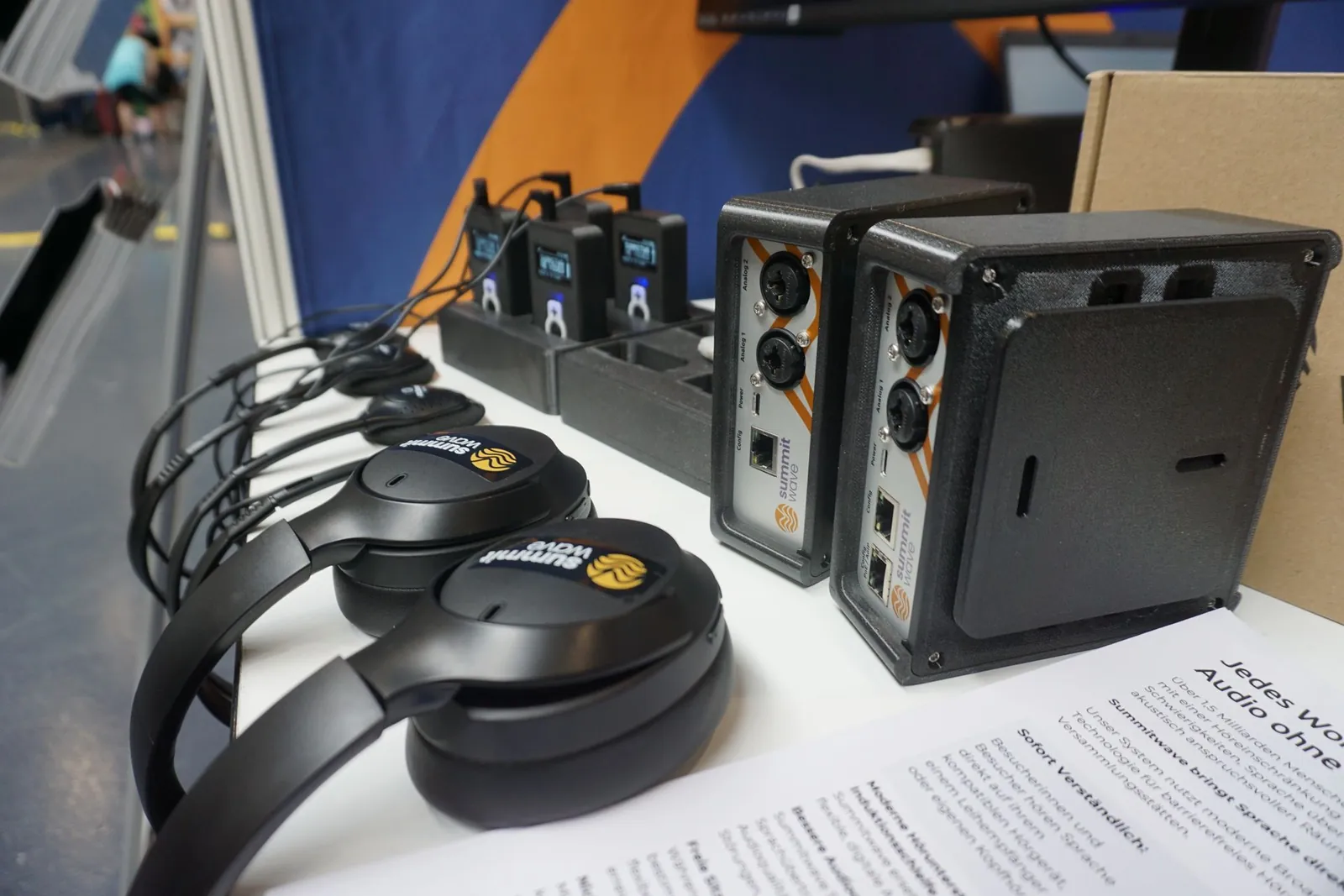
Assistive listening for theatres: every word, right to the back row.
Accessible listening for theatres, civic halls and arts centres. The stage signal reaches hearing aids, headphones and loan receivers directly via Auracast™. The sound in the auditorium stays exactly as it is.
Louder does not help
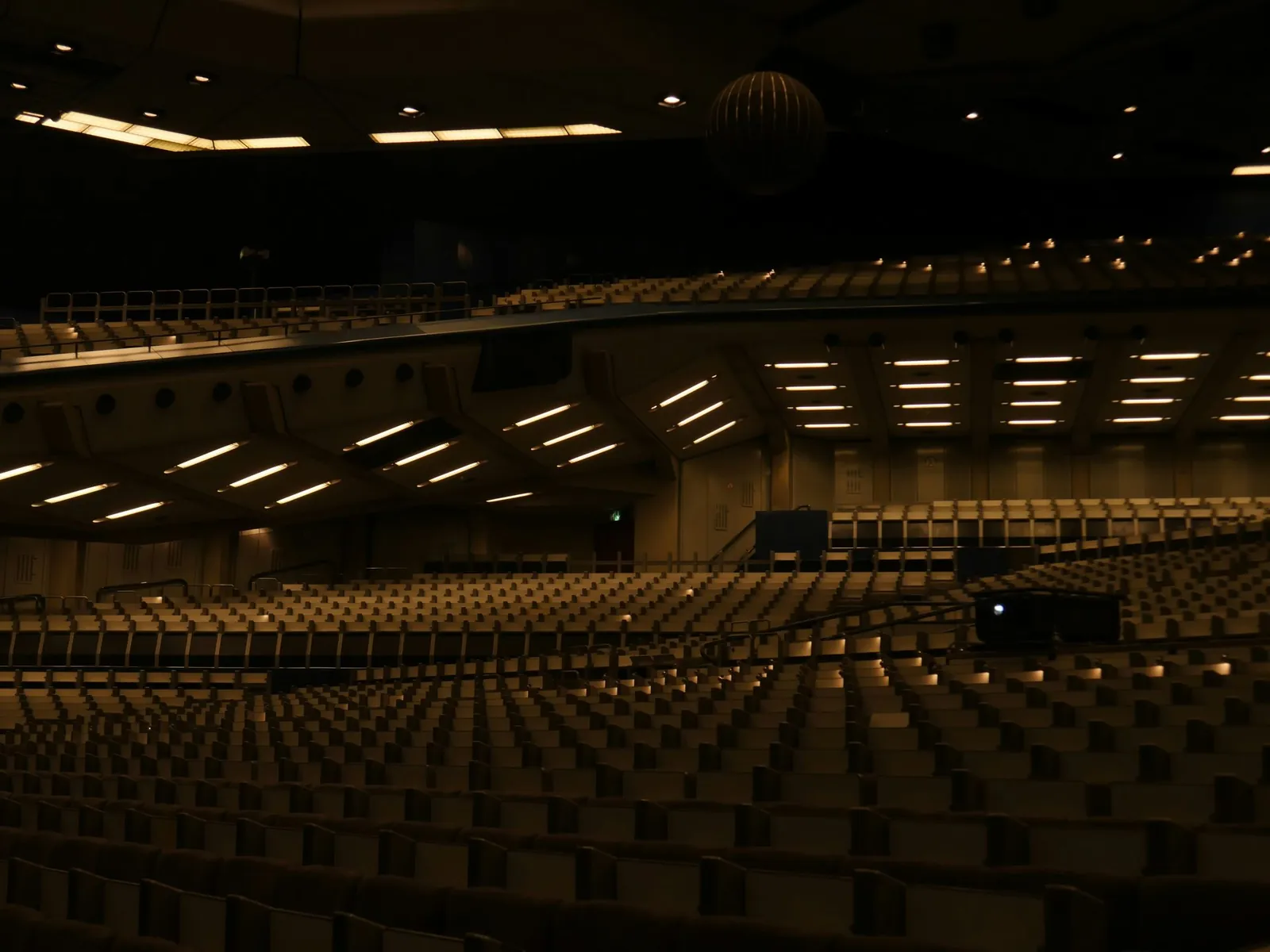
Someone with a hearing aid in row twelve hears the performance but understands only part of it. Reverberation, distance from the stage, quiet dialogue and background noise make speech unintelligible, even when it is loud enough.
An assistive listening system therefore does not make the auditorium louder. It brings the signal closer to the people who need it. Past the room, straight into the ear.
From the stage microphone to the ear
Your existing sound system stays in place. Summitwave connects to one output and brings the signal to the people who need it.
1 · Stage
Microphone
Hearing assistance starts at the microphone. Any reverberation it picks up is transmitted too.
2 · Sound desk
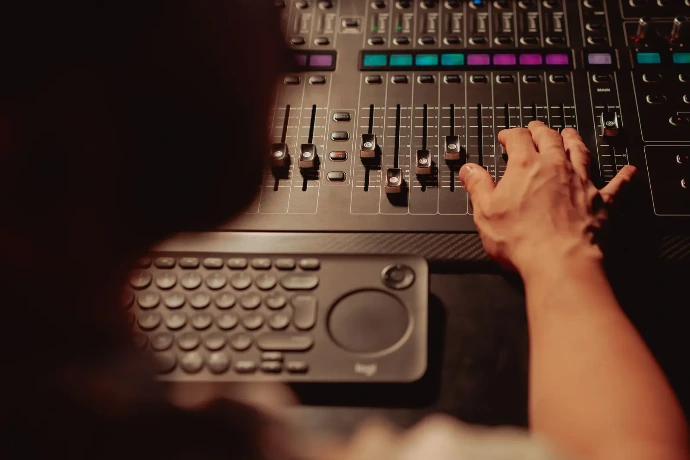
Mixing console
A free output feeds the signal, analogue via XLR or digital via Dante/AES67.
3 · Transmitter
Summitwave TX
Broadcasts via Auracast to any number of listeners. Set it up once and it runs in the background.
4 · Audience
In the ear
Directly in the Auracast hearing aid or through the Summitwave RX Auracast receiver on loan.
Which guest needs what?
One transmitter, several programmes
The Summitwave TX carries up to six channels at the same time. Alongside hearing assistance, for example:
- Audio description for blind and partially sighted guests, without the rest of the audience hearing it.
- Interpretation for international touring productions.
- Speech focus for readings and panel discussions.
The content comes from your sound team or the interpreter booth. The transmitter broadcasts it.
It has to work at the box office
Assistive listening rarely fails because of the technology. It fails because of the process. That is why day-to-day operation belongs in the plan:
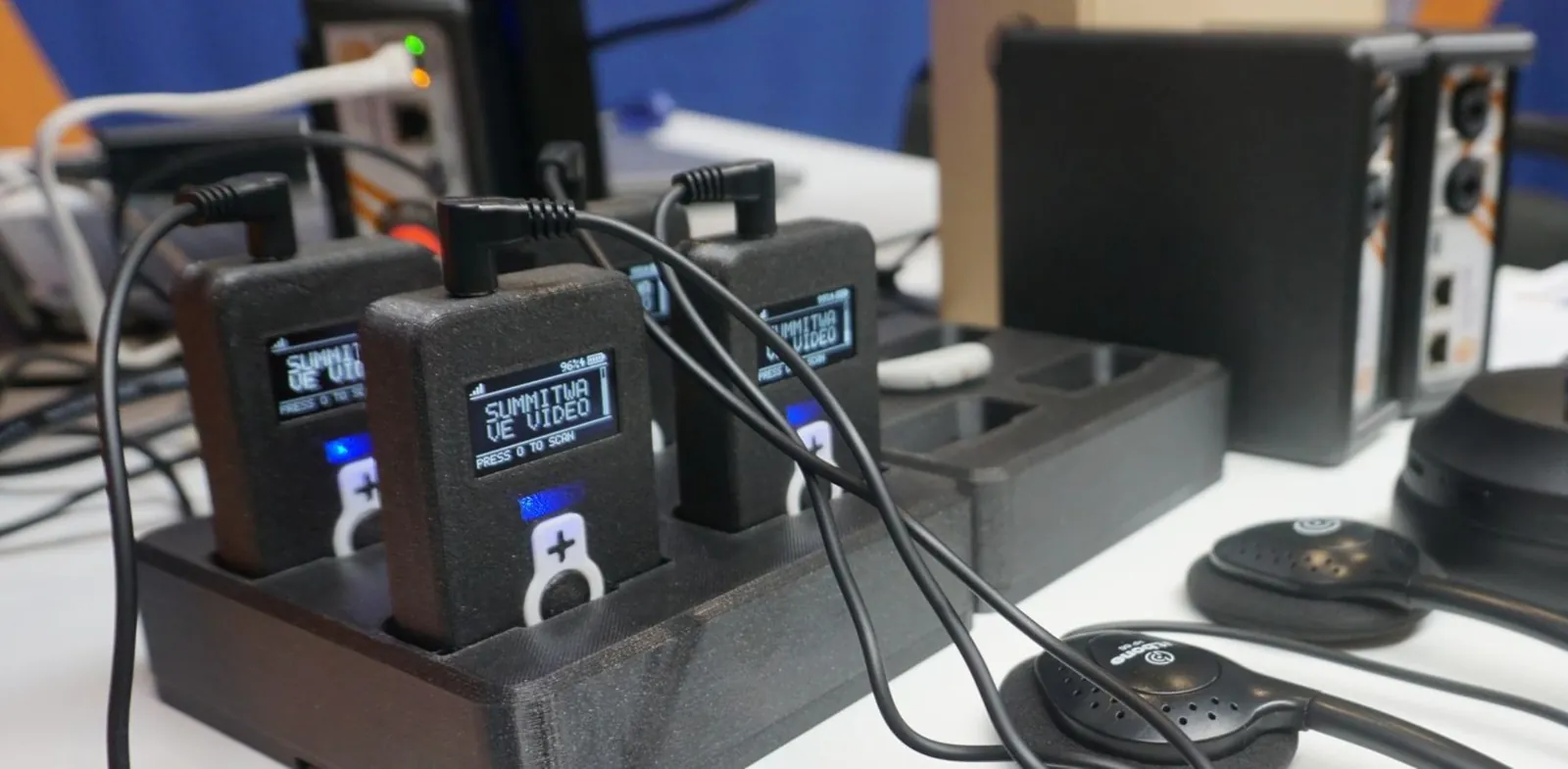
Issuing. Staff select the channel on the RX and activate the channel lock. The guest receives a device that works straight away.
Return and charging. Where the devices are kept, who charges them and who collects them after the performance.
Announcement. Mention the assistive listening system in the programme, the ticket shop and on your website, not just at the auditorium door.



What an Auracast system does not replace
Not every hearing aid receives Auracast directly. That is why loan receivers with neckloops are part of the plan from the start.
One transmitter does not automatically cover every seat. Balconies, boxes and side areas are measured in Quality Control mode during the trial run. That shows whether one or more transmitter cells are needed.
Assistive listening in theatres: what venues ask us
At the INTHEGA theatre fair, civic halls, arts centres and theatres asked us these questions again and again.
No. Auracast replaces the induction loop (also called a hearing loop or audio induction loop): no cables in the floor, no building work. Guests with a telecoil listen via the loan receiver with a neckloop. An existing loop can continue to be used in parallel.
Yes, if the hearing aid receives Auracast. Everyone else collects a Summitwave RX at the box office: with headphones, or with an inductive neckloop for hearing aids with a telecoil.
For accessibility we recommend one RX Set 04 per 100 seats. A trial run with a real audience shows whether your venue needs more.
The transmitter is connected to an output of your mixing console. The system therefore works regardless of the equipment a visiting company brings.
No. Staff set the RX to the right channel, and guests simply switch it on.
Yes. The Summitwave TX carries up to six channels. Audio description runs as a separate channel alongside hearing assistance, for blind and partially sighted guests, without the auditorium hearing it.
The device finder lists hearing aids and headphones with Auracast.
Trial run in your venue
We send you a Summitwave TX and a set of loan receivers. One auditorium, one performance, a real audience. Afterwards you know how good the coverage is and how many loan receivers you need.